New Issues and stamp news 871
Faroe Islands – His Majesty King Frederik X
Issue date: May 27, 2024
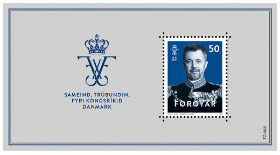
During her traditional New Year’s address on December 31, 2023, Denmark’s 83-year-old monarch, Her Majesty Queen Margrethe II, declared her intention to step down as regent and head of state, passing the throne to her eldest son, Crown Prince Frederik. To commemorate this transition, PostNord, Tusass Greenland, and Posta Faroe Islands are issuing a joint stamp issue featuring HM King Frederik X.
Following Danish tradition, the abdication ceremony was simple, with Queen Margrethe signing her resignation during a Council of State on January 14, 2024, exactly 52 years after assuming the throne herself. With the Queen’s signature, the Crown Prince ascended to the throne, and an hour later, Prime Minister Mette Frederiksen officially proclaimed King Frederik X from the balcony of Christiansborg, the Danish Parliament.
Thus, the Danish Commonwealth countries – Denmark, Greenland, and the Faroe Islands – welcomed their new regent and head of state, King Frederik X, whose Royal motto is ‘United, committed, for the Kingdom of Denmark.’
Constitutional monarchy The Danish kingdom is a constitutional monarchy. That is to say, the regent’s function is to be chairman – like a constitutional president without political power. All political decisions rest with the elected parliamentarians, government, and prime minister, while the regent’s role is to represent the Kingdom, for which the elected representatives work. This takes the form of weekly state councils, where the prime minister informs about the state of affairs and the government’s work – and where the regent, together with the responsible minister, signs new laws. After a parliamentary election, the king chooses the party chairman that the majority of political parties point to, to form a government.
The New King King Frederik X was born on 26 May 1968, son of Queen Margrethe II and her husband Prince Henrik (Henri de Laborde de Monpezat). After graduating in 1986, he began his military service with the Queen’s Life Guard Regiment. Over time, he has served in the Army, the Air Force and the Navy – and is an officer in all three services. From 1989 to 1995 he studied political science at Aarhus University and Harvard University. He has been attached to the diplomatic corps at Denmark’s UN mission in New York and worked as embassy secretary at the Danish embassy in Paris.
King Frederik X During the 2000 Olympics in Sydney, Crown Prince Frederik of Denmark crossed paths with Australian Mary Donaldson. Their encounter blossomed into a romance, and in 2003, the young couple announced their engagement, followed by their marriage the next year. Their family grew over the years, welcoming their first son, Christian, in 2005, daughter Isabella in 2007, and twins Vincent and Josephine in 2011.
King Frederik is renowned for his active participation in sports, excelling in various disciplines such as sailing, running, and cycling. Notably, he achieved a milestone by becoming the first Royal to complete an ‘Ironman’ competition in 2013. An Ironman is a long-distance triathlon race consisting of a 3.9 km swim, a 180.2 km bicycle ride, and a 42.2 km run (marathon) completed in that order. It is widely considered one of the most difficult one-day sporting events in the world.
His passion for sports led him to become a member of the International Olympic Committee in 2009, a position for which he was re-elected in 2018 for another 8-year term.
Denmark’s new king is characterized by his down-to-earth demeanour, sparking expectations of a rejuvenation and modernization of the Royal household and its traditionally strict protocols. As a modern family, they seem to resonate with contemporary societal values.
e extend our sincerest wishes to King Frederik X as he ascends to the throne, hoping for a peaceful and prosperous reign in the Commonwealth.
Faroe Islands – Fossá – The Faroe Islands’ Largest Waterfall
Issue date: May 27, 2024
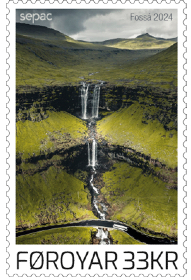
In broad terms, one could describe the topography of the Faroe Islands, especially in the northern part of the country, as featuring mountainous terrain and valleys of differing depths and elevations. These mountainsides are steep, marked by horizontal rock ledges, and crisscrossed by more or less vertical stripes created by streams and gradually widening as they descend towards the coastline. In the valleys, these streams often converge, forming regular rivers or pooling into freshwater lakes of various sizes. These lakes, in turn, serve as the origins of larger rivers that flow continuously towards the coast and ultimately into the sea.
The bedrock of the Faroe Islands consists of sturdy rock formations that have their origins in volcanic processes along the oceanic ridge. This ridge formed as the North American/Greenland tectonic plate gradually separated from the Eurasian plate, leading to the creation and expansion of the Atlantic Ocean. Over countless millennia, successive layers of molten lava accumulated, gradually solidifying into the characteristic black basalt. The forces of nature, including the passage of time, wind, weather, ice ages, land subsidence, and land uplift, have collectively sculpted and eroded these basalt plains until only the distinct islands we recognize today remain.
It’s evident that in this type of terrain, groundwater is absent, making all the fresh water in the Faroe Islands surface water that originates from precipitation in the form of rain and snow. This water, adhering to the laws of gravity, descends relentlessly towards the sea. Our region receives abundant rainfall, and ironically, drought can occur when there is an extended period of infrequent rain.
This dynamic transformation of the landscape is readily observable during heavy rainfall. The once-muted streaks constituting the mountainside streams swell and turn frothy white, evolving into powerful torrents as they approach the coastline. We refer to this as áarføri, a term used when the river’s surge fills its banks, eroding parts of them and posing a risk of flooding.
The steep rock ledges give rise to numerous expansive waterfalls, scattered throughout the islands in a variety of shapes and sizes. Some of these waterfalls are particularly awe-inspiring when they cascade down their rocky precipices. We have previously issued stamps featuring large waterfalls, e.g., Svartifossur in Tórshavn, Múlafossur in Gásadalur and Skorá at Leynavatn.
Fossá The largest and most impressive waterfall is Fossá, located to the south of Haldarsvík village in the northern region of Streymoy. Originating from Lake Víkarvatn, nestled in a mountain valley between the peaks of Vatnfelli and Gásafelli, this river descends through Fossdalur. Along its course, it merges with other streams until it reaches a dramatic culmination point. Here, it plunges from a towering rock precipice, approximately 140 meters above sea level, before descending onto another ledge and crashing into a jumble of rocks at the mountainside’s base. From there, the water meanders its way into the sea.
During dry spells, the waterfall can span just a few meters in width. However, when the rains arrive, it truly shines, expanding to more than 30 meters in width on its uppermost two-tiered segment. The contrasting black basalt backdrop adds an extra layer of drama to the brilliant white foam. If you happen to be fortunate and find yourself nearby on a stormy, rainy day, you might witness the unique Faroese waterfall phenomenon, where the wind seizes the water and sends it soaring upwards, as if lifting its skirt, creating a captivating spectacle.
Faroe Islands – Organic Art II
Issue date: May 27, 2024
This stamp issue features the works of Súsan í Jákupsstovu (born in 1946). Súsan boasts a rich background in various forms of craftsmanship. Her artistic and applied art creations span an array of techniques, including watercolour, weaving, needlework, as well as the use of clay and various textiles.
Súsan has been at the forefront of this popular artistic movement in a period when public discourse focuses on pollution-causing transportation, reducing waste, and utilizing our domestic resources. Long before this became a mainstream topic, Súsan explored the tanning of fish skin in Northern Norway. She has incorporated materials such as fish skin, fish bones, sheep rumen, and various sheep derivatives into her art. Additionally, Súsan has crafted her own paper to use in her artistic creations.
Súsan also initiated the groundbreaking School of Art and Handiwork in the town of Sandur. This venture was a significant undertaking, requiring supportive political attitudes. However, due to a lack of sustained backing the school ceased operations after four years.
Susan believes that utilizing our own resources is of the utmost importance. While she acknowledges the benefits and usefulness of going abroad for learning, she emphasizes the significance of building on our domestic foundation and embracing our inherited traditions.
Súsan has contributed to numerous projects in different churches. After a fire in 1989, the Church of Sandur underwent repairs, and Súsan, a resident of Sandur at the time, was tasked with designing the woven interior and illustrations. This included creating a strip rug and various ornaments for the pulpit, corresponding to the different seasons of the church year. Weaving, particularly pictorial weaving, has been a central aspect of Súsan’s artistry. She frequently dyes the materials herself, a technique she also employed in her work for the Church of Sandur.
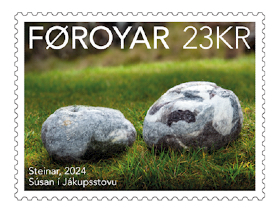
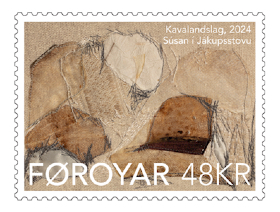
Susan frequently draws inspiration for her designs from the natural landscapes of the Faroe Islands. Two notable examples that showcase her artistry are the stamp motifs titled “Snowscape” and “Stones.”
“Snowscape” features a woolen backdrop, intricately woven from Faroese wool, with quilted and embroidered enhancements. The piece incorporates a variety of materials, including fish skin, rumen, handmade paper, and silk. The artwork captures the essence of a wintry scene—parts covered in snow and ice, interspersed with visible stones and perhaps even a sheltering sheep. The colour palette blends white, yellowish hues, and warm browns, creating a contrast between cold and warm elements, suggesting a sense of life, perhaps dormant or hibernating, beneath the snowy layer.
The artwork titled “Stones” is a sculptural piece, consisting of two actual stones rather than a mere depiction of them. Crafted from fulled wool, these sculptures are shaped like stones and stuffed with coat wool. This creation is unique and perfectly emblematic of our country, as stones are a fundamental aspect of our landscape. This piece complements Karsten Hoydal’s poem “Bright lichen-grey stones along the way,” where the subtle light grey tones, visible in certain areas, seem to bring the stone to life. This artwork is not just a visual experience but also invites interpretation, much like a poem waiting to be read.
Faroe Islands – Faroese Vinyl Records
Issue date: May 27, 2024
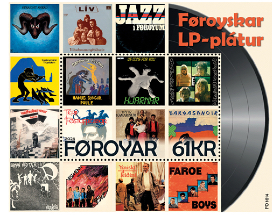
The passage of time is unceasing. We arrive and depart, carrying with us a cultural heritage rich in folk ballads, melodies, and music.
This heritage remains significant to us, resonating with our emotions, bringing joy and reverence.
The technical ability to faithfully reproduce beautiful songs and music wasn’t always a given. For generations, ballads flourished in their own unique way, with each generation preserving and passing down this legacy, similar to the Kingo hymns which are also firmly embedded in the Faroese musical tradition.
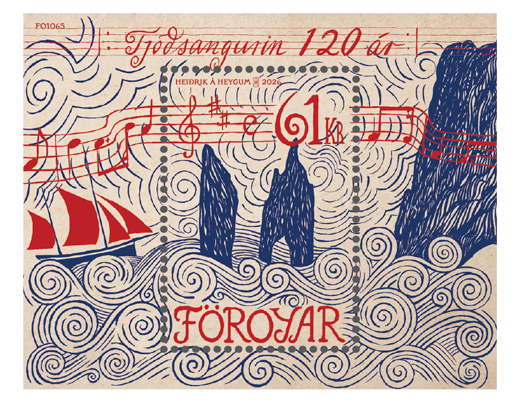
Technological advancements eventually made their way to our shores, leaving our ancestors in awe as they for the first time witnessed a magical device reproducing speech and songs. By 1906, general stores in the Faroe Islands began promoting the sale of gramophones and records. The debut of a record featuring Faroese songs, produced by the renowned global company His Masters Voice, marked a significant moment. This record was made available in shops in Havn and Tvøroyri in 1928.
In 1937, the Polyphone record company released three records in an initial effort to pique the interest of the Faroese population in purchasing records featuring Faroese content, but all of which featured foreign female vocalists.
In the late 1940s, the Faroese audience was eager for Faroese song content, leading to an increase in record production in the subsequent years. Over time, various foreign record companies entered the scene, resulting in a greater diversity of records. These releases predominantly highlighted patriotic songs, choirs, and spiritual music.
In 1948, the first Faroese record label was established, known as Grammofonupptøkan (The Gramophone Recording Company), closely affiliated with the Open Brethren congregation in Klaksvík. This record company became a prolific producer of numerous records, primarily featuring spiritual songs and music.
In 1957, the Faroese Radio, Útvarp Føroya, commenced regular broadcasts, heralding a significant transformation. It brought both Faroese and international music into every household in the Faroe Islands.
This development opened up fresh possibilities, leading to a rapid surge in entertainment music. Over the following years, a plethora of records were created, several of them becoming enduring hits that can still be enjoyed today.
The initial recordings of entertainment music, the pop music of that era, were quite rudimentary. These recordings were made with resourcefulness, skill, and unwavering enthusiasm, often taking place in kitchens, living rooms, or basements. Two pioneering entrepreneurs in Tórshavn paved the way and provided young artists with the opportunities to experiment with material suitable for recording.
During this period, proper recording studios for music and songs were not yet accessible in the Faroe Islands. This limitation posed challenges for the recently established radio and led to most music recordings being conducted throughout the country. It wasnt until the seventies that a recording studio was finally established.
The first LP records emerged in the latter half of the sixties, prior to which only singles and EP records were manufactured.
During the early nineties, vinyl records vanished as CDs emerged as the latest technological breakthrough. This ushered in a transformative era where the musical landscape underwent profound changes. Despite the prevailing culture in the music industry, this shift also gave rise to new needs and a renewed curiosity for the old ways. Many musicians and bands began to view producing LP records as a cherished endeavour.
The stamp collection showcases album covers that played a pivotal role in the musical landscape during the 25-year period when vinyl records were produced in the Faroe Islands. This era spanned from the latter half of the sixties to the early nineties, encompassing a wide range of genres such as spiritual music, folk and fiddler tunes, jazz, children music, and rock. This music continues to evoke joy and reverence among listeners.
Faroe Islands – Europa 2024: Underwater Fauna and Flora
Issue date: May 27, 2024
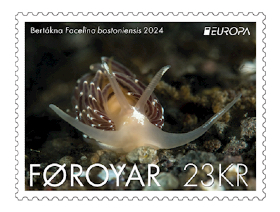
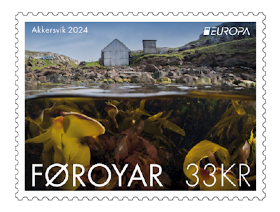
This year’s Europa stamp series showcases the captivating underwater photography of Faroese photographic artist, Harald Bjørgvin. The collection features a stunning array of marine life and vegetation, marking the first time Harald’s photographs have been selected for Posta stamps.
Harald shares his thoughts on underwater photography: Diving into the underwater realm offers a unique perspective on nature’s diversity and beauty. It’s a world where the vibrancy of marine life coexists with the serene sway of seaweed forests. These scenes, ranging from bustling aquatic ecosystems to tranquil underwater landscapes, are not only captivating but also deeply moving.
While diving, I often take a large number of photos, typically ranging from 200 to 500. On a good day, I might capture one exceptional shot, and occasionally, I manage to get between 3 and 5 that are truly outstanding. My goal is always to snap an excellent photo from the start. The key elements include the lighting and the process of perfecting the images. Moreover, composition plays a crucial role. When using a flashlight, it’s vital to ensure it has the right intensity and angle to capture the desired lighting effect. Equally important is maintaining a calm and gentle presence to avoid disturbing the marine environment.
Capturing an image that includes both above and below the water’s surface was a matter of precise timing. The camera angle is crucial; it should be positioned slightly downward so that the waterline bisects the image near its centre. Lighting plays a pivotal role: the underwater portion needs to be adequately illuminated, while the light above the surface shouldn’t be overpowering. This necessitated the use of a flashlight beneath the water’s surface and careful adjustment of the camera settings to ensure the light intensity above the surface was just right. Fortunately, during this particular shot, the sunlight was gentle, greatly aiding the process. The photo should be crisp and detailed, capturing everything from the nearby seaweed to the more distant boathouse.
When capturing macro photos of nearby subjects, I meticulously search the surroundings for potential motifs. For more distant subjects, I switch to a wide-angle lens, focusing on capturing seascapes and seaweed patterns. In such scenarios, utilizing natural light proves beneficial. On sunny days, positioning myself higher in the water to harness the sun’s rays for the photograph is particularly effective. The visual impact is striking as the sunlight filters through the water, highlighting the vibrant colours of the seaweed.
Near the shore, you’ll typically encounter seaweed that clings to rocks or slabs. This type thrives in the shallows. As you venture into deeper waters, different seaweed varieties emerge. In places like Akkersvík, a rich tapestry of seaweed is visible, especially at low tide, with various types growing in close proximity, almost as if arranged by a landscaper. The seaweed varies greatly; some are frayed and worn, while others feature thick or slender fronds, with some so delicate they’re nearly transparent. A notable feature of seaweed is its diverse color palette – hues of yellow, green, red, and brown. On sunny days, this kaleidoscope of colors in the shallow waters creates a dynamic, vibrant display.
Nudibranchs, a type of sea slug, stand out as some of the most vivid and striking inhabitants of the marine world. These shell-less gastropods move in a manner akin to snails. Their Faroese name, “bertákna,” (bare gills) is inspired by their exposed respiratory organs, the gills, situated towards the back on their spine. These creatures inhabit every ocean globally, ranging from the surface to depths exceeding 700 meters. To date, over 3,000 species of nudibranchs have been identified.
23 KR: Nudibranch Facelina bostoniensis. This image was captured at Inni á Sundi on May 19th, 2020. It features a nudibranch advancing towards the camera. The equipment used was a Nikon d810 with a 105mm lens, settings at f/25, 1/160 sec, ISO-500.
33 KR: Above/Underneath. Shot in Akkersvík at Hvítanes on June 7th, 2021, this photo presents a unique above-and-below perspective, highlighting seaweed and a boathouse. The photograph was taken using a Nikon d810 with a 14mm lens, set at f14, 1/160 sec, ISO-320.
Jersey – Definitive Stamps 2024 – The Crest of Jersey & HM King Charles III
Issue date: May 28, 2024
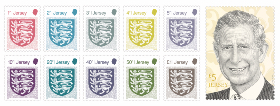
To commemorate HM King Charles III, Jersey Stamps will be issuing a new set of definitive stamps,which will be issued on Tuesday 28th May 2024.
Jersey Post last produced a definitive stamp issue in 2015. This new issue for 2024 has been developed to update the original issue and has evolved to represent the monarchy of His Majesty King Charles III. Unlike commemorative stamps, which are only available for two years, definitive stamps have an extended sale period, as they are designed to serve everyday postal needs.
The Crest of Jersey The values of the Crest of Jersey definitive stamps start from 1p and proceed to the final 10th stamp value, which is £1. The crest design was first featured on the definitives issue of 2015. The stamps have been redesigned for 2024, bearing the official cypher of His Majesty King Charles III and depicting the Crest of Jersey in a new palette of colours. The names of all twelve of Jersey’s parishes are incorporated within the wave pattern background.
The Island of Jersey has been a Crown dependency since 1204 and in 1279, the seal from which the Coat of Arms, or Crest of Jersey is derived, was granted to the Bailiff of Jersey by King Edward I. Hundreds of years later, it was recognised by the College of Arms that they held no record of this event, as the College was not incorporated until 1484. In 1907, the continued use of the Arms of Jersey, Guernsey and Alderney, ‘as previously granted’ was sanctioned by King Edward VII.
The Crest of Jersey features a shield with three leopards passant guardant. The leopards depicted have had varying depictions over the centuries, and differing versions appear on the Jersey Flag, bank notes, ancient island drawings and modern-day buildings.
His Majesty King Charles III As with the previous New Definitive Stamps Jersey has produced a £5 definitive stamp. Marking the first new monarchy in almost 70 years, the Coronation of Their Majesties King Charles III and Queen Camilla took place at Westminster Abbey on Saturday 6 May 2023: an era-defining event, celebrating both time-honoured tradition and a vision for the future.
First seen on the miniature sheet design of the Coronation issue of November 2023, renowned stamp and engraving artist, Martin Mörck, has produced a regal portrait of His Majesty, based on an original photograph by Mario Testino. The background of the stamp displays a floral pattern, echoing His Majesty’s commitment to the natural world.