New Issues and stamp news 909
Faroe Islands – The scout movement in the Faroe Islands – 100 years
Issue date: February 2, 2026
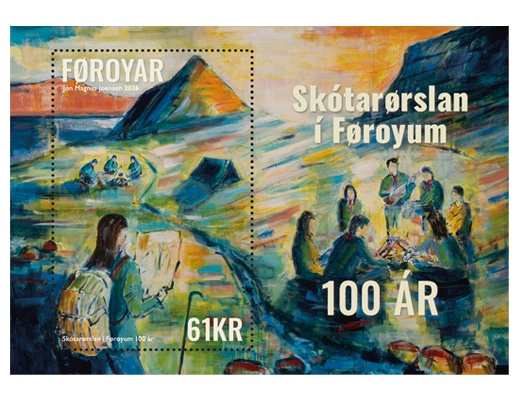
The scout movement in the Faroe Islands began in 1926, and this year marks its centenary. Today it is a respected and influential movement within Faroese society.Worldwide, scouting is the largest children’s and youth organisation, with more than 50 million members across over 200 countries.
Origins The scout movement was founded by the Englishman Robert Baden-Powell (1857–1941). Having served as a general in India and South Africa, he was already a well-known military figure.
He believed young people needed meaningful activities in their spare time, and in 1907 he organised the first scout camp on Brownsea Island, England, with 20 boys. There, participants learnt about nature, camped outdoors, and discovered the joys of outdoor life. This event marked the beginning of a movement that quickly spread across the globe.
The following year Baden-Powell published Scouting for Boys, aiming to foster the physical, social and spiritual development of young people. He went on to lead the international scout movement for the rest of his life.
In 1910, Girl Guiding began. Baden-Powell’s wife, Olave Baden-Powell (1889–1977), later became the World Chief Guide.
Scouting in the Faroe Islands In 1926, four young people in Tórshavn took the initiative to establish scouting in the Faroe Islands. Led by Eskild Christiansen, this became the start of the Yellow Scouts – Sigmund Brestisson’s scout corps (SSB).
In 1928 the YWCA Guides followed, and in 1939 the YMCA Scouts – the Green Scouts – were founded. Since 1980, girls have also been able to join the YMCA Scouts.
Today, the YMCA Scouts are active in eleven towns and villages across the Faroe Islands, with around 1,000 members. The Salvation Army has also run scout groups for a period.
Patrol system and activities One of scouting’s hallmarks is the patrol system, where children work in small groups of 5–8. Baden-Powell believed that young people learn best when given responsibility. Patrol leaders are usually older scouts with experience and leadership skills, and strong fellowship is the mark of a good patrol.
Scouting follows the principle of “learning by doing” – children learn best by being active.
The uniform, with buttons, pockets, scarf and often a belt knife, creates a sense of identity and belonging. Scouts can earn proficiency badges in skills such as knotting, outdoor cooking, nature knowledge, and map-and-compass use.
Competitions are also held, such as the YMCA Scouts’ annual patrol competition, where the most successful patrol is honoured. Each year scouts also raise funds for charitable causes.
Principles
The scout movement is built on a scout law with ten rules – for example, that a scout is helpful, trustworthy and a good friend.
Its guiding principles are that a scout: • takes responsibility for themselves • shows respect, helpfulness and community spirit • cares for nature • is faithful to God or a higher power
The Green Scouts are linked with the Faroese Church. Scouts also make a scout promise and live by the motto: Be prepared!
Camps and special days Scouting life is often lived in tents – for “scouting is outdoor life.” Local and international scout camps are held, and every four years scouts from around the world gather at the World Jamboree. Faroese scouts have often taken part.
In the evenings, scouts gather around the campfire to sing, perform sketches, and enjoy time together.
In the Faroe Islands, scouts take part in parades on Grækarismessa (12 March) and Flag Day (25 April). On 22 February, scouts celebrate World Thinking Day – also known as Founders’ Day or St George’s Day – marking the shared birthday of Robert and Olave Baden-Powell. On this day the Green Scouts attend church.
Conclusion Recruiting new members and leaders can be a challenge, as today’s children and young people have many opportunities. Yet the scout movement has shown that it is here to stay.
Many community leaders were once scouts themselves and often emphasise how much scouting has meant in their lives. The experiences, skills and memories gained through scouting remain for life.
“Once a scout – always a scout!”
Faroe Islands – 50 Years of Faroese Postal Service
Issue date: February 1, 2026
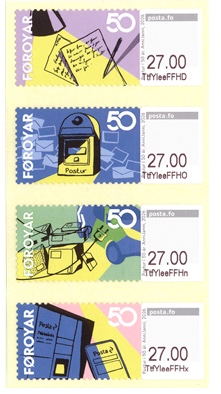
On 1 April 2026, it will be 50 years since the Faroese postal service was established. This milestone is being celebrated with four franking labels that illustrate the development over the past 50 years – from handwritten letters and Christmas greetings, delivered by dedicated postal workers to every household, to today’s digital era, where the majority of our mail is handled via computer or app.
The four franking labels depict: The era when people sent handwritten letters to each other. The era when mailboxes were full of letters. The era when people sent and received many parcels, delivered by electric postal vans. The digital present, where it is possible to use an app, and people can send and collect parcels from parcel lockers across the country.
The illustrations are hand-drawn and colored in pure, vibrant tones, creating a strong graphic impression. The blue Posta color is featured throughout the franking labels, while the yellow contrast color highlights the theme of each individual label.
Alderney – Bird Observatory
Issue date: February 11, 2026
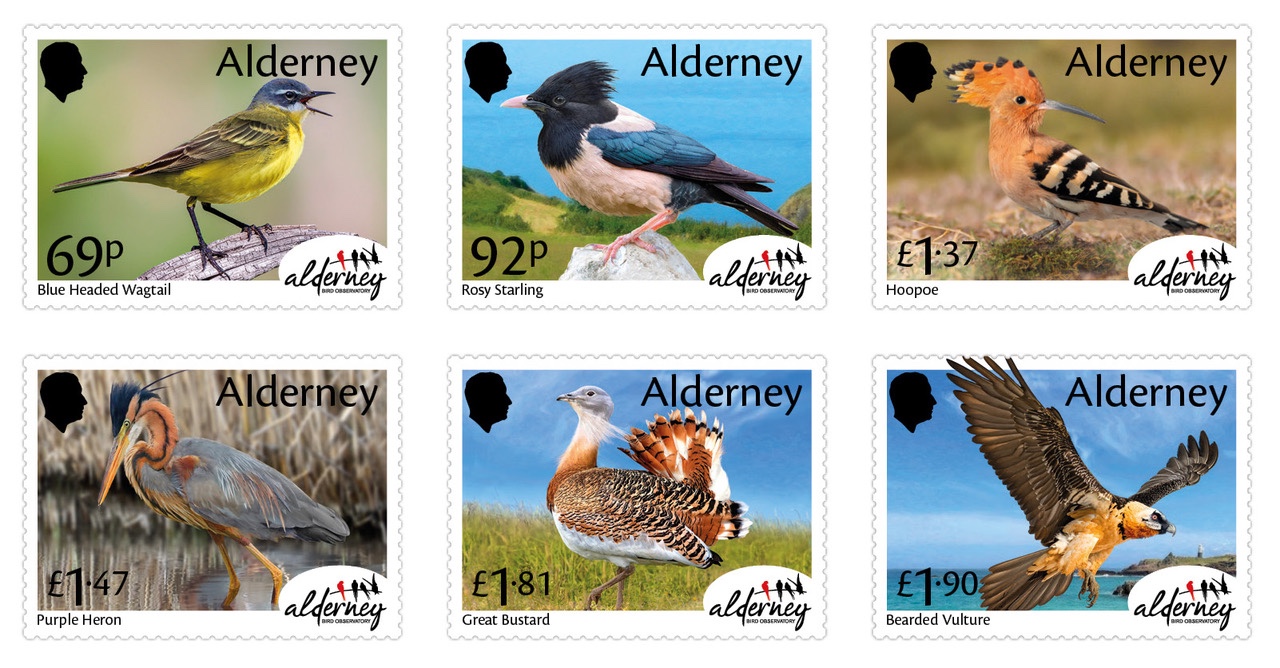
Guernsey Post’s philatelic bureau will release a set of stamps celebrating the work of the Alderney Bird Observatory (ABO), the Channel Islands’ only bird observatory and an important centre for monitoring migration along the East Atlantic Flyway.
Established in 2016, the Observatory is the twentieth to join the network of British Bird Observatories and the southernmost within the British Isles. Its location on Alderney places it directly on a major migratory route between Europe and Africa, where the island’s cliffs, grasslands and wetlands provide vital stopping points for countless species moving through the region each year.
The ABO carries out year-round monitoring. Daily censuses, bird ringing, acoustic monitoring and tracking technologies such as the Motus radio tag network enable the ABO to gather detailed insights into both diurnal and nocturnal migration. When the Observatory was founded, Alderney’s Bird List stood at 287 species; by the end of 2025, this figure had risen to 317, reflecting nearly a decade of intensive fieldwork.
Education and community involvement form an important part of the ABO’s mission. Guided walks, talks, school visits and volunteer opportunities help residents and visitors engage with Alderney’s natural heritage, while the Observatory’s data contributes to national and international conservation research.
The stamps This special issue depicts some of the rarer species recorded by the Observatory: 69p – Blue-headed Wagtail 92p – Rosy Starling £1.37 – Hoopoe £1.47 – Purple Heron £1.81 – Great Bustard £1.90 – Bearded Vulture (Lammergeier)
Bridget Yabsley, head of philatelic at Guernsey Post, said: – “The Alderney Bird Observatory plays a vital role in understanding migration along one of Europe’s busiest flyways. We are delighted to celebrate its work through this new stamp issue, which highlights some of the extraordinary species recorded on the island.”
Åland – Boathouses
Issue date: February 4, 2026
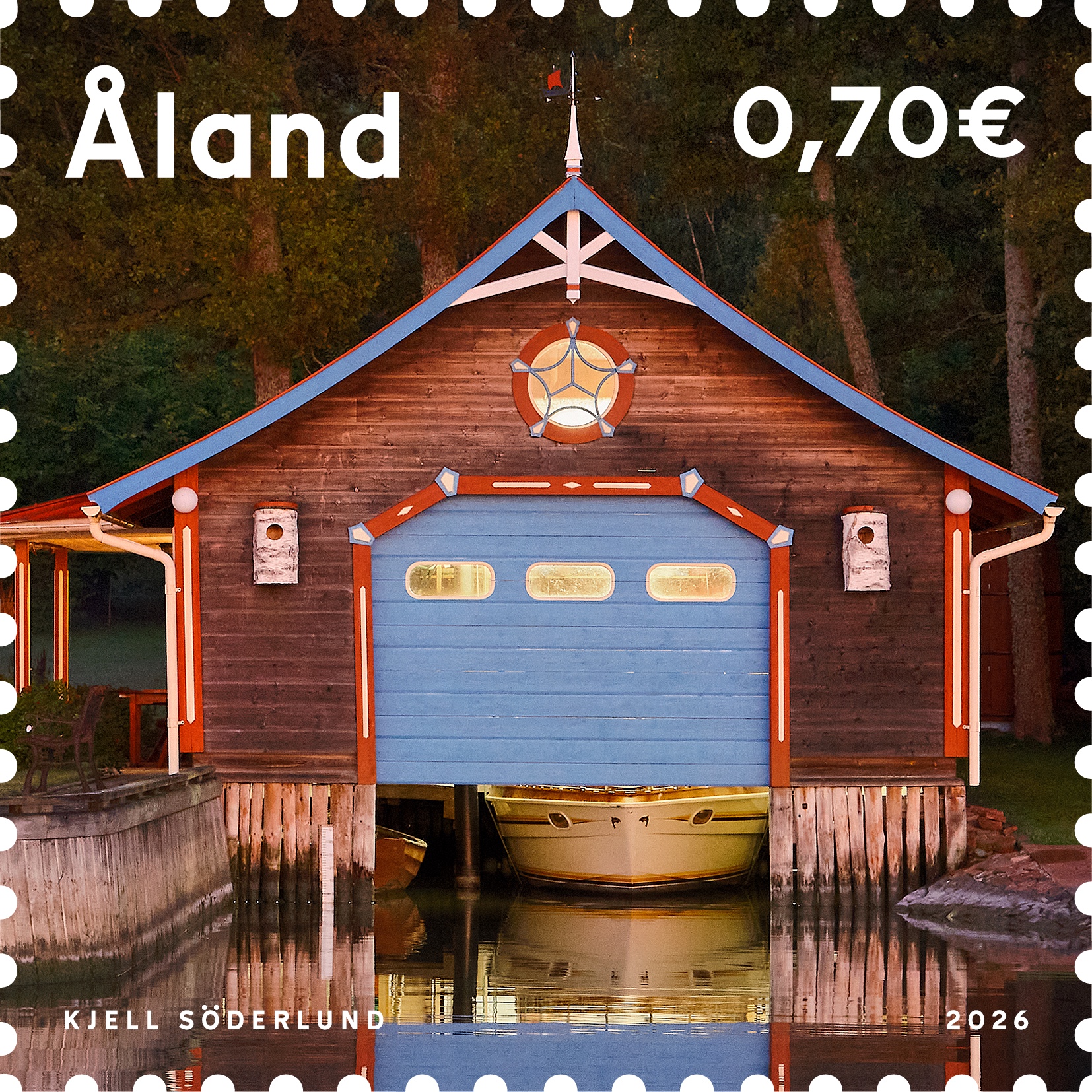
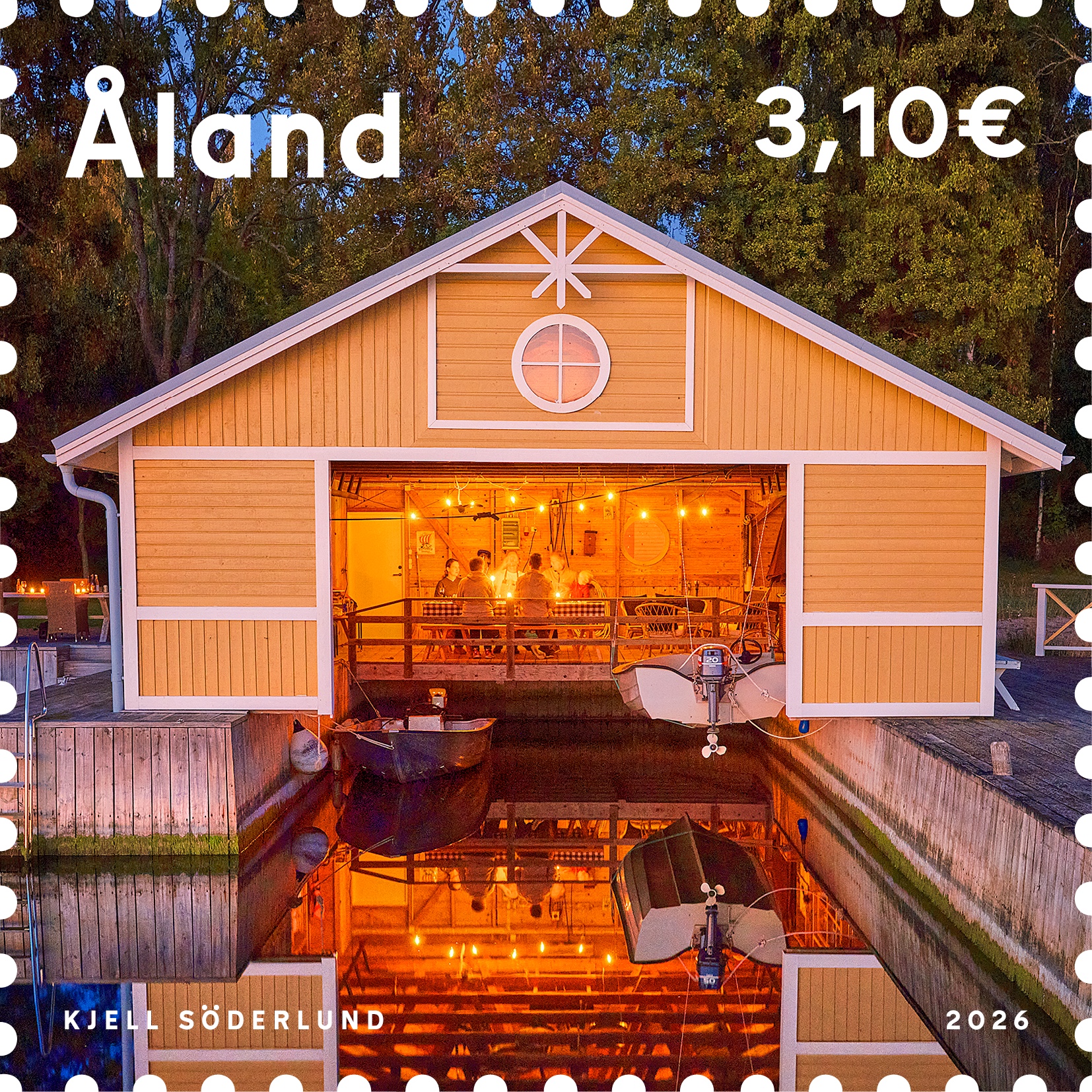
On 4 February, Åland Post releases the third and final part of the stamp series featuring Åland boathouse culture. Kjell Söderlund photographed two charming boathouses where boat storage meets fellowship and creativity.
“With these two stamps, we conclude our three-year series on boathouses, highlighting the many expressions of these buildings and their place in the Åland coastal landscape. This year’s stamps feature boathouses that hold far more than just boats – they become meeting places and spaces for creative joy. The stamp images, photographed in autumn, reflect craftsmanship, warmth, and a sense of community,” says Johanna Finne, Head of Design at Åland Post Stamps.
One stamp features an original brown boathouse with a red roof and blue details in Kalmarnäs, designed and built by the owner Göran Sundblom over six years in the early 2000s. Measuring 62 m², the boathouse not only accommodates two wooden boats that Göran built but also has a sauna area with a kitchenette and a roofed terrace – a functional boathouse with a personal touch.
The other stamp depicts a stately yellow boathouse on the opposite side of the bay, near the Lemström Canal. Built in 2001, Magnus Lundberg’s boathouse measures approximately 100 m². A boat hangs in the boathouse year-round, always ready for fishing trips. In the summer, it is joined by an Anytec sheet metal boat. From early spring to late autumn, the boathouse is a gathering place for friends and family. To make even better use of the space, a hoistable deck was built, which, when lowered, transforms the boathouse into a festive venue for pizza evenings and crayfish parties.
The stamp series featuring Åland boathouses was launched in 2024 and will conclude in 2026. The series comprises a total of 6 stamps.
Guernsey – Island’s Parishes
Issue date: February 11, 2026
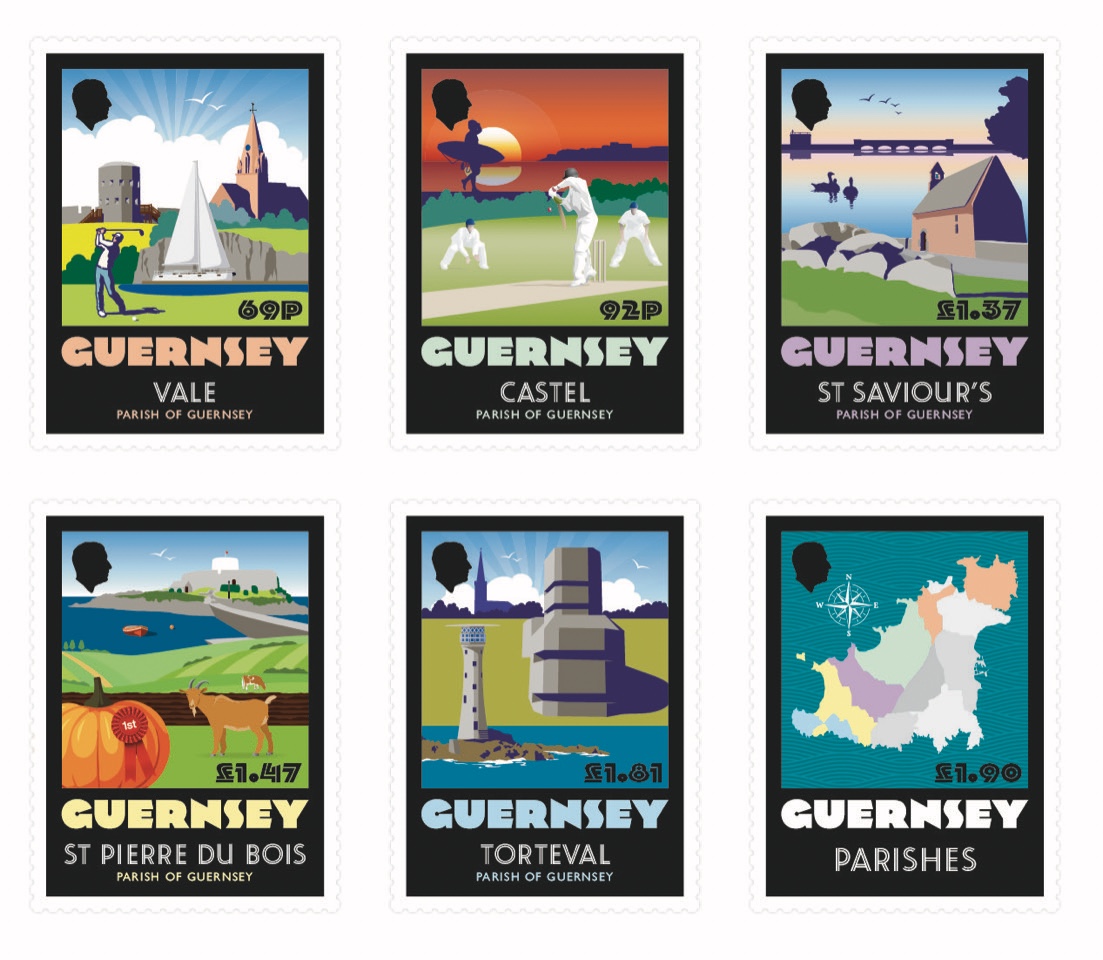
Guernsey Post’s philatelic bureau will release a set of six stamps celebrating the history, character, and community spirit of Guernsey’s parishes. The stamps present a modern reinterpretation of vintage travel-poster artwork, each design capturing distinctive features that help define parish identity across the island.
In Guernsey, the island has been divided into ten historic parishes since the 12th century, when churches were built and Christian administration replaced the older feudal fiefs. Although parish boundaries have softened with development, parish identity remains a strong and enduring thread in island life.
The stamps 69p – Vale Featuring its natural harbours, sweeping coastline, L’Ancresse Common, Vale Church and Rousse Tower, the design reflects the parish’s blend of maritime heritage, open landscape and historic fortifications.
92p – Castel This stamp depicts a west-coast sunset, a cricket match and Fort Hommet, celebrating Castel’s popular beaches, rural scenery, and the diverse defensive structures found along its shoreline.
£1.37 – St Saviour’s Known for its countryside and floral displays, St Saviour’s is represented through imagery of St Apolline’s Chapel, Neolithic sites, the reservoir and the Millennium Walk.
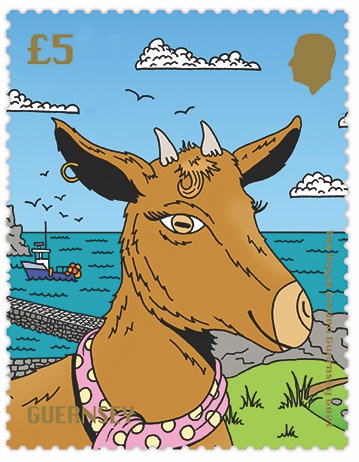
£1.47 – St Pierre du Bois The design includes a prize-winning pumpkin from the West Show, a Royal Golden Guernsey Goat and the parish’s contrasting coastlines, highlighting its agricultural traditions and natural beauty.
£1.81 – Torteval Guernsey’s smallest parish is shown through dramatic cliff views, Hanois Lighthouse, Pleinmont Observation Tower and Torteval Church.
£1.90 – Parishes Map This final stamp presents a colour-coded map of Guernsey, showing the locations of the five featured parishes and referencing each parish’s historic douzaine system.
Bridget Yabsley, head of philatelic at Guernsey Post, said: – “These stamps celebrate the individuality of Guernsey’s parishes and the heritage that continues to shape community life today. As the first in a two-part series, this issue sets the scene for a second collection in 2027, when the remaining parishes will be featured. Together, the series offers a rich visual tribute to the landscapes, traditions and landmarks that make the island unique.”