New Issues and stamp news 895
Guernsey – Island’s architecture with stapms depicting St James
Issue date: July 16, 2025
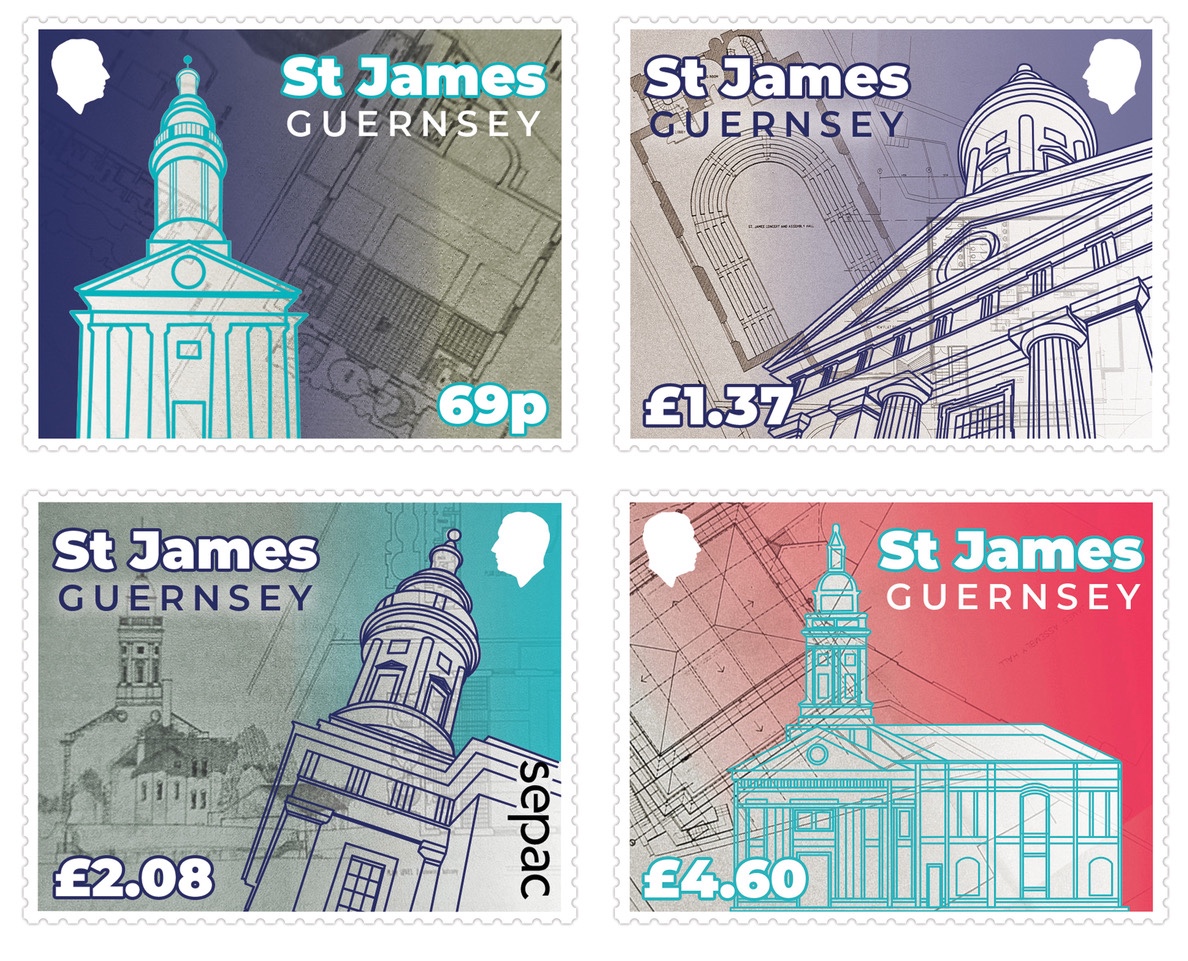
Guernsey Post’s philatelic bureau announces that it will issue stamps depicting illustrations of Guernsey’s St James, a 200-year old former church which has become a cultural centre in more recent years
The stamps, which have been designed in an architectural drawing style to depict this iconic building, form part of a joint issue with SEPAC (Small European Postal Administration Cooperation) for its 2025 theme, Architecture.
The building was designed by notable architect John Wilson in Greek Revival style. It was completed in 1818 and became known as the Church of St James the Less. It soon became a key architectural feature of the area, valued for its elegant design. Over the years, it has served a variety of purposes, including acting as the chapel for Elizabeth College students. However, by 1970 it was deemed redundant and fell into disrepair.
In 1981, the Friends of St James Association was established to oversee its restoration and transition into a concert and assembly hall. With support from the States of Guernsey and financial backing for the restoration, work on the building proceeded, culminating in its reopening on 5 July 1985. The ceremony was attended by HRH the Duke of Kent, marking a new chapter in St James’ history.
40 years on from its original conception as a concert hall, St James has become a cultural hub for Guernsey, welcoming thousands of people through its doors to learn, perform and enjoy the arts. A thriving part of the Guernsey community, it delivers important cultural diversity to the island through music events, classical concerts, comedy shows and theatre performances.
Bridget Yabsley, head of philatelic at Guernsey Post, said: – “This year’s SEPAC theme creates an opportunity for us to showcase the wonderful building of St James, which this year is marking the 40th anniversary of its renaissance with a programme of celebratory events, highlighting its place at the heart of Guernsey’s cultural and community life.”
Guernsey – Golden Guernsey Goat
Issue date: July 16, 2025
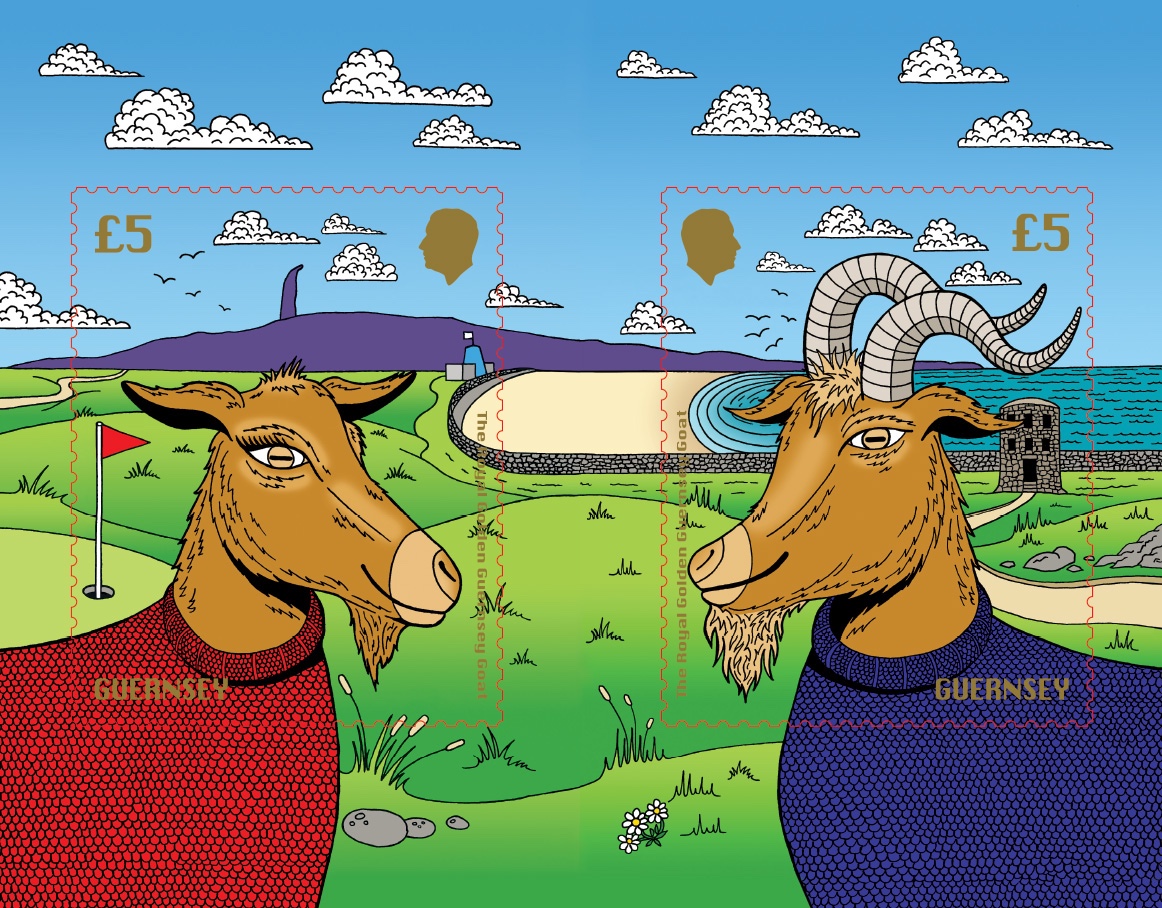

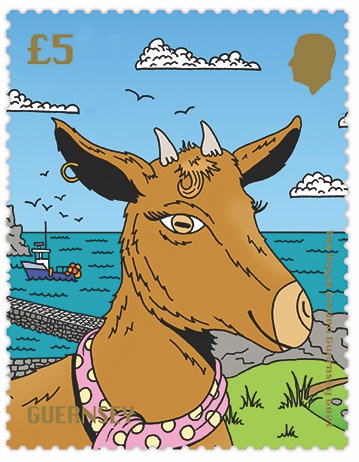
Guernsey Post’s philatelic bureau will release new postal definitive stamps depicting the Golden Guernsey Goat on the first anniversary of the breed being awarded a Royal title
The Royal title was granted to the Guernsey Goat by King Charles III and Queen Camilla on 16 July 2024, during their first official visit to Guernsey since His Majesty’s accession to the throne. It was the first time in recent history that such a title had been bestowed upon a livestock breed.
Now formally known as the Royal Golden Guernsey Goat, this rare dairy breed, which is commonly found on Guernsey, is known for its golden skin and hair, as well as long hair, and sometimes a small white marking on the head.
Despite its royal recognition, the breed remains endangered, with fewer than 2,000 living animals. Conservation efforts, led by organisations such as the Rare Breeds Survival Trust, aim to preserve and promote the breed’s unique genetic heritage.
World first for philately with release of Cyberstamps
As an exciting addition to this issue, and in a world first for philately, Guernsey Post has produced two limited edition cyberstamps depicting characters Billy and Nanny, who are Royal Guernsey Goats.
Each cyberstamp product comprises a limited edition gummed cyberstamp and a souvenir sheet comprising the two official postal stamps with a special cancel.
The limited edition cyberstamp is supplied with a unique digital twin, which can be revealed, along with its rarity, by scanning the QR Card on the cyberstamp on the reverse of the card, with a smart phone. The digital twin can be saved into a personal digital album which may be accessed at www.guernseycyberstamps.com.
Bridget Yabsley, head of philatelic at Guernsey Post, said: – “We are delighted to mark the first anniversary of the Guernsey Goat breed receiving its Royal title with our latest stamps, and to announce the launch of our cyberstamps. We hope that collectors and enthusiasts alike will share our excitement for this philatelic world first.”
Guernsey – Royal Visit
Issue date: June 14, 2025
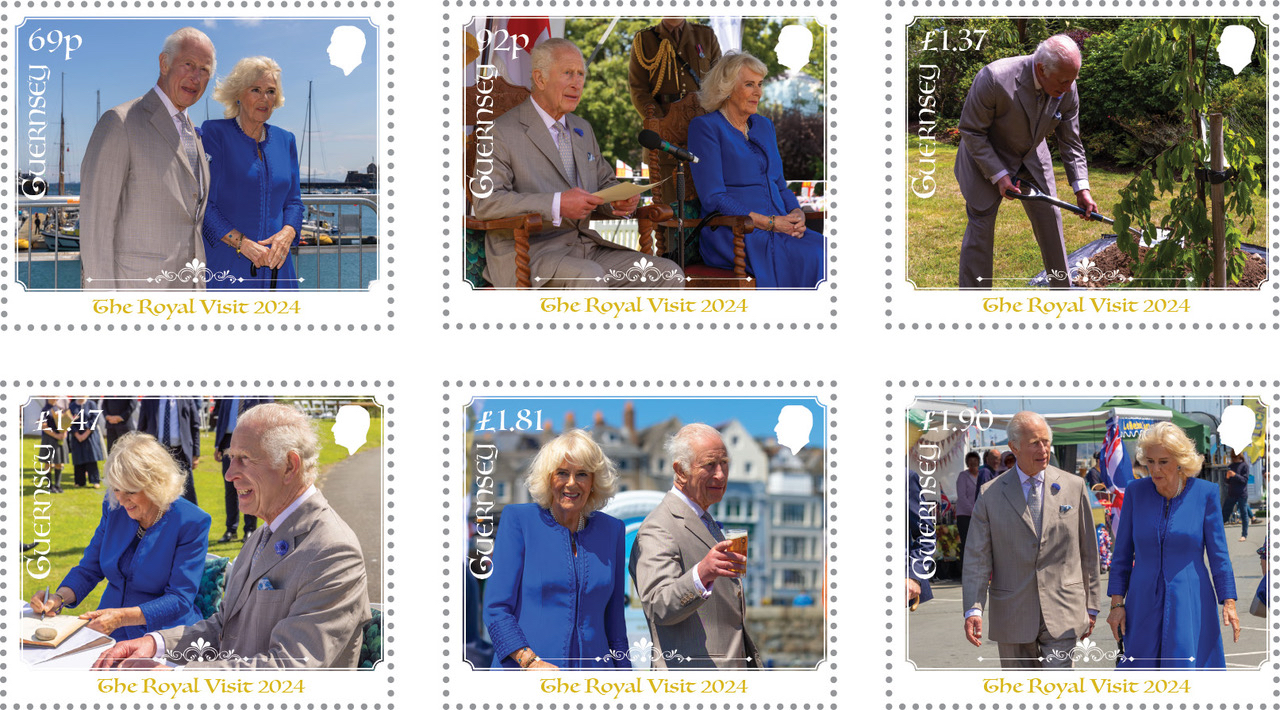
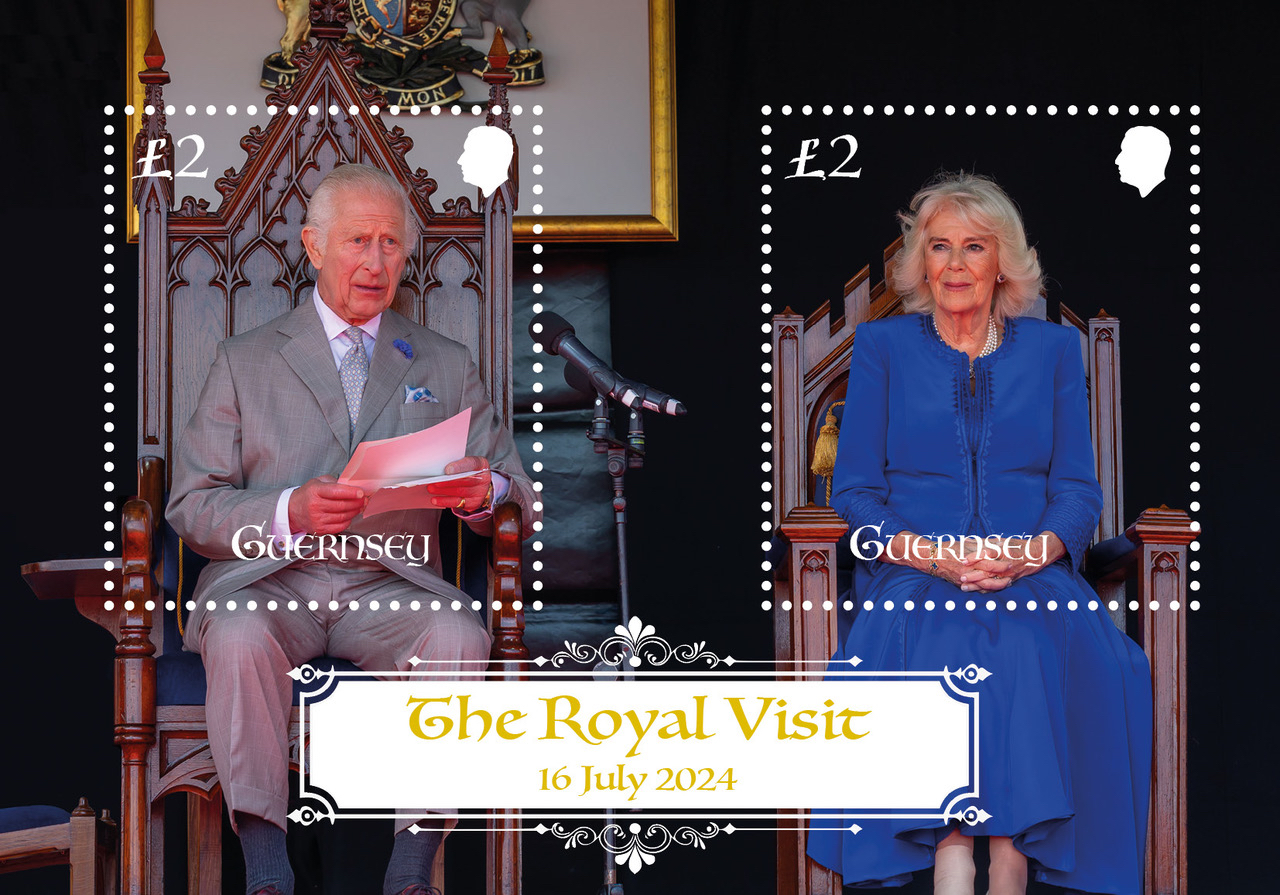
Guernsey Post’s philatelic bureau will release stamps depicting images taken during the Royal Visit to Guernsey of His Majesty King Charles III and Her Majesty Queen Camilla on 16th July 2024. The stamps will be released on 14th June, the King’s Official Birthday, in advance of the anniversary of Their Majesties’ first Royal Visit to Guernsey since King Charles III’s Accession to the throne.
The Royal Visit highlighted the special and historic relationship between the Channel Islands and the Crown which stretches back centuries. The programme included elements that showcased the communities of Guernsey, Alderney, and Sark, the islands’ unique local culture and heritage, and the Bailiwick’s commitment to supporting biodiversity, sustainability and combatting climate change.
The Stamps 69p – Their Majesties at the end of the Crown Pier, St Peter Port, Guernsey. 92p – Their Majesties, with King Charles III addressing invited guests at Les Cotils, St Peter Port. £1.37 – King Charles III planting a tree in the grounds of the Governor’s House. £1.47 –Their Majesties sign Les Cotils’ visitors’ book. £1.81 – Their Majesties; King Charles III samples a local brew named ‘Charles’, brewed in honour of His Coronation by a local producer, on the Crown Pier, St Peter Port. £1.90 – Their Majesties on walk about, Crown Pier, St Peter Port.
The Miniature Sheet, comprising two stamps, depicts Their Majesties on the formal stage where King Charles presided over a short special sitting of the States of Deliberation, held on the Crown Pier, where the community watched the proceedings.
Faroe Islands – Oyggjarnar – A Faroese Women’s Magazine
Issue date: May 26, 2025
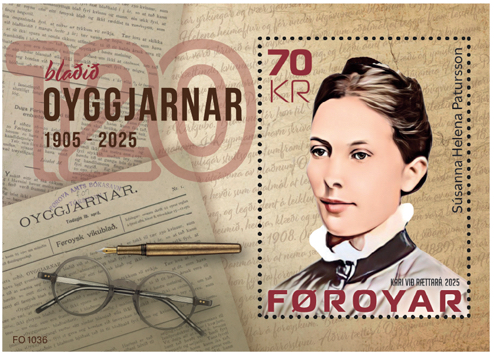
The first women’s magazine in Faroese was called Oyggjarnar (The Islands) and was published from 1905 to 1908. The editor was Súsanna Helena Patursson (1864–1916), daughter of Elin and Páll in Kirkjubøur and sister to notable national figures Sverre, Gazet, Siggert, and especially Jóannes Patursson. As a young woman, Súsanna Helena moved to Copenhagen, where she learned needlework and piano and later became a legal secretary. In 1896, she co-founded a Faroese Women’s Progress Association as a protest against the exclusion of women from the Faroese Association. The following year, the association amended its statutes, leading to 24 women joining, which resulted in the women’s association disbanding.
In 1904, Súsanna Helena Patursson returned to the Faroe Islands. For the three years that Oyggjarnar was in circulation, she edited and wrote most of its content herself. The magazine started as a weekly and later became a fortnightly publication, featuring articles and advertisements across four pages.
At the time, fishing was emerging as a lucrative industry in the Faroe Islands, which began to challenge traditional ideals of women in the agrarian society. Oyggjarnar advocated for women’s education, suffrage, and home improvement, emphasizing that everyone—not just men and boys—needed nutritious food. The magazine published recipes for new dishes and articles on cultivating vegetables suited to the Faroese climate.
Instead of focusing on traditional roles like tending cows, working with wool, and making clothing, the magazine elevated housekeeping as a central task. Homes were to be neat and clean, with advice on how curtains and rugs could make living rooms cosy. However, the magazine not only rejected the traditional roles of rural women but also criticized the new working roles of women as “fishwives” and “fish girls,” warning that they risked losing their “grace and modesty.”
Súsanna Helena Patursson was a trailblazer not only in Faroese journalism and the fight for gender equality but also in literature. She wrote the first play performed in Faroese in 1889, and among her unpublished writings are two long stories about betrayed love and revenge. Her recipes and articles on home improvement were later compiled and published in 1907 and 1912, just a few years before her death.
Faroe Islands – Europa 2025: National Archaeological Discoveries
Issue date: May 26, 2025
During the Viking Age (AD 800–1050) in Scandinavia, the Vikings set sail towards 18 remote islands in the Atlantic Ocean: the Faroe Islands.
Archaeological investigations in the Faroe Islands indicate that the first Norse settlement began in the 8th century, and by the 9th century, permanent settlements had been established across the islands. Analyses of barley grains suggest that human activity on the Faroes predates this period. By dating burnt barley grains found beneath a Viking-age house in the village of Sandur, we can confirm activity in the 4th and 6th centuries as well as in the 6th and 8th centuries. However, the dating cannot determine the extent of this activity, or the origins of the people involved.
Findings from archaeological excavations show that Viking-age settlers in the Faroe Islands built large farms with longhouses, outbuildings, and stone enclosures along fjords and straits. The farms were located near the sea, making it easy to pull boats ashore for fishing and travel between islands and to other lands. In addition to being close to the sea, access to freshwater was also crucial for both household use and livestock. This is evident in Viking settlements such as Niðri á Toft in Kvívík and Toftanes in Leirvík, where both farms are positioned near the shore and a stream.
A variety of artefacts have been uncovered, shedding light on daily life in these settlements. For instance, soapstone vessels, spindle whorls, animal bones near fireplaces, sharpening stones for knives, and decorative beads have been found, indicating activities such as wool working and food preparation. Other intriguing discoveries include children’s toys. At Niðri á Toft in Kvívík, wooden toy horses and boats have been found, reflecting the real-life activities of their parents, who rode horses and sailed boats. Alongside children’s toys, game pieces and board games have also been unearthed.
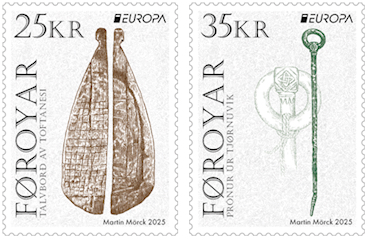
At the Viking-age farm at Toftanes in Leirvík, a chessboard with two carved game boards has been discovered. One side features a board for the Viking game hneftafl (a strategy game similar to chess), while the other side displays a board for the game Nine Men’s Morris. These finds suggest that people in the Viking Age also engaged in leisure activities. Other excavations and finds provide insight into religious practices of the period.
In Tjørnuvík, Yviri í Trøð, Viking graves have been discovered, with burials oriented in different directions. Some of the deceased were buried with objects, including a young woman who was laid to rest with a dress pin—a long needle used to fasten clothing. These pins provide the earliest evidence of settlement in the Faroe Islands during the Viking Age.
At Toftanes in Leirvík, a well-preserved wooden crucifix has been found. Meanwhile, excavations at Yviri í Trøð have revealed evidence of Norse paganism (pre-Christian beliefs), while the crucifix at Toftanes symbolizes Christianity. This suggests that both Norse paganism and Christianity were practiced simultaneously during the Viking Age. Through archaeological excavations and discoveries, we gain insights into what was significant for both children and adults in Viking society. These artefacts, along with the objects depicted on the stamps, can be seen in the exhibition halls of the National Museum of the Faroe Islands in Tórshavn.