New Issues and stamp news 913
Malta – Malta Tramways 1905-1929
Issue date: April 17, 2026
The Malta Tramways Ltd.began operations in 1905, at a time when the Island was under British rule and urban areas such as Valletta and Floriana were rapidly growing. Increasing commercial activity between the capital and surrounding towns had created a need for a reliable, modern transport system. Although the system lasted for just twenty-four years, it remains an intriguing chapter in Malta’s transport history as an early attempt to modernise mobility on the Island.
The project was promoted by a private British company that secured a concession from the colonial government. Considerable investment was required to lay rails, construct power infrastructure and import electric tramcars from Great Britain. Planning the routes was challenging due to Malta’s hilly terrain and narrow streets. Nevertheless, the system eventually connected Valletta with towns such as Paola, Cospicua, Zebbug Birkirkara, Hamrun and Qormi, forming a small network that facilitated travel.
Electric trams ran along the main roads, across the central part of the Island. However, the system also experienced several unusual and unfortunate incidents. Mechanical breakdowns were common in the early years trams occasionally struggled with braking or traction especially on steep roads. There were accidents involving horse-drawn carts and elderly pedestrians who were unfamiliar with the new form of transport.
Despite its promise, the Malta Tramways faced persistent financial and operational difficulties. The cost of maintaining tracks and electrical equipment was high, while passenger revenue was insufficient. Post WWI competition from buses and automobiles gradually eroded its usefulness and by 1929 the service was discontinued as it was no longer financially sustainable.
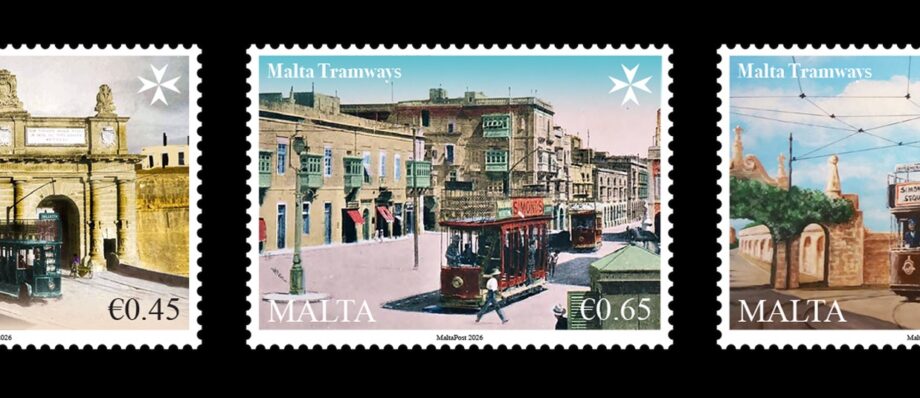
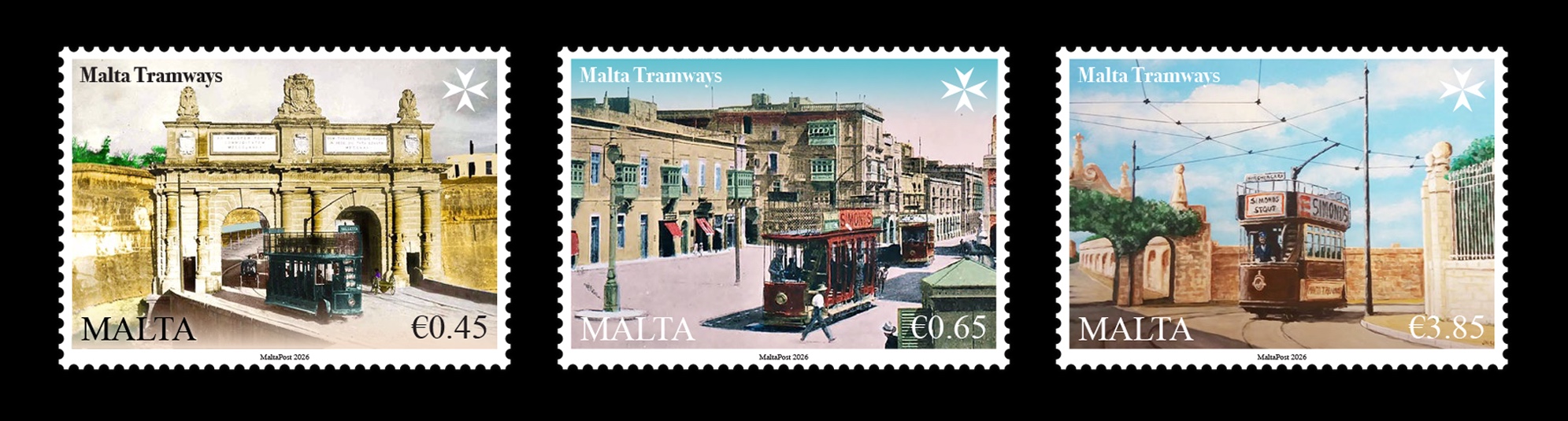
To commemorate the Malta Tramways, MaltaPost will issue a set of three stamps illustrating scenes of the historic tram as it travelled through different parts of Malta. The 0.45 stamp portrays a tram on its return journey to Valletta, about to pass beneath one of the arches of the baroque Portes des Bombes gateway within the Floriana fortifications. The image is based on an original monochrome photo colourised by artist Edgar Vella. The 0.65 stamp depicts two trams travelling along St. Anne Street, the main route linking Floriana with Valletta. This scene is reproduced from an original postcard of the period. The 3.85 stamp features an image derived from an original painting by artist John N. Scerri. It shows the tram as it travels back to Valletta from Birkirkara while passing alongside the arch of the historic Wignacourt Aqueduct.
Postal: MaltaPost p.l.c. | Website: https://www.maltaphilately.com/
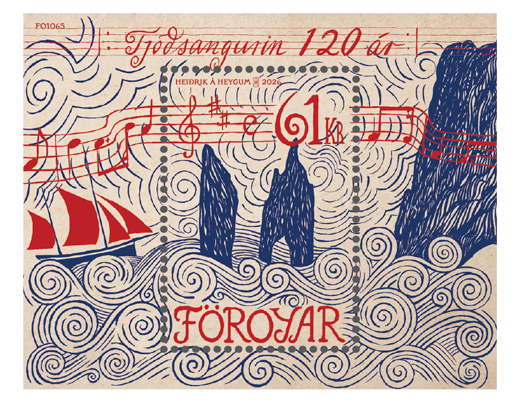
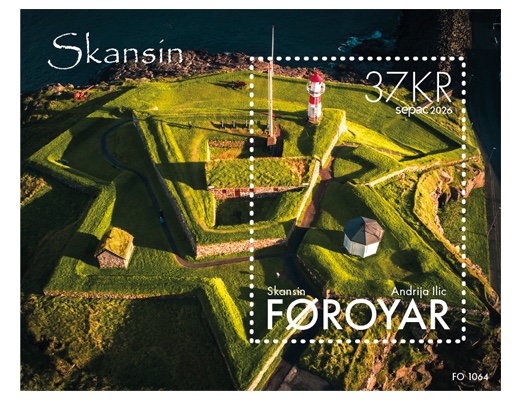
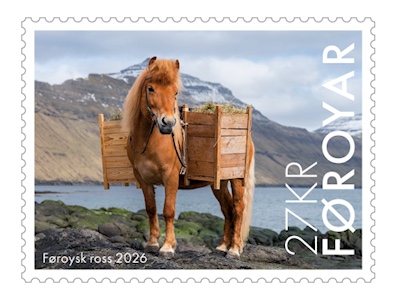
Faroe Islands – Faroese Postal Service 50 years
Issue date: April 01, 2026
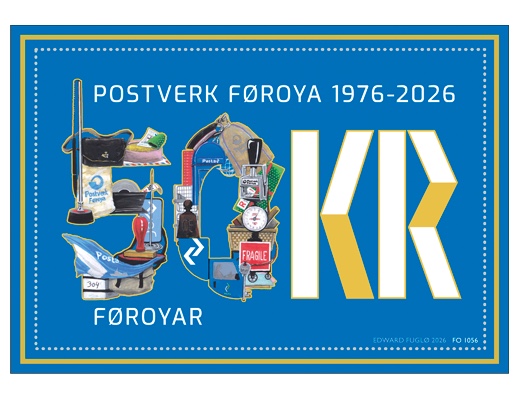
On 1 April 1976, responsibility for postal services in the Faroe Islands was transferred from the Danish Post to the Faroese authorities. This milestone was marked by the issuance of the first Faroese stamps cancelled with Faroese postmarks, following an earlier Danish-issued Faroese stamp set in 1975. Many people collected envelopes bearing the historic first-day cancellation.
At the time, communication in the Faroes was limited. Telephone services were often semi-automatic, news travelled mainly via radio, newspapers, and magazines, and the postal service played a central role in daily life. Newspapers, weekly magazines, mail-order catalogues, personal letters, postcards, and seasonal mail—especially Christmas cards and parcels—connected people across villages and islands and brought international news into homes.
Over the past 50 years, major changes in infrastructure and technology have transformed Faroese society. Roads, tunnels, and undersea connections have shortened travel times, while digital communication has largely replaced letters and traditional mail-order services. Messages that once took days now travel instantly, and catalogues have been replaced by online shopping.
Despite these changes, the postal service remains essential for the delivery of physical items. Stamp issuing has continued as an important tradition, with more than 1,000 Faroese stamps released since 1976, often reflecting Faroese culture, history, landscapes, and national events.
Finland – Erik Bruun 100 Years
Issue date: April 07, 2026
Posti will issue stamps to celebrate the 100th anniversary of the beloved graphic designer Erik Bruun. Erik Bruun is a master of purposeful graphics, known not only from posters and banknotes but also as a productive designer of stamps.
Erik Bruun designed his first stamps in the mid-1980s, around the same time as he was working on the Finnish Markka banknote reform. Within more than 30 years, Bruun has designed approximately 100 different stamps.
Bruun has been familiar with the proportions required for stamps for many years: “A good street poster must also work matchbox-sized. When the matchbox is viewed from an arm’s length, the viewing angle is roughly the same as when glancing at at a street poster from a car window. The viewer should be able to understand the idea within seconds. The same formula applies to designing stamps.”
”Stamps, posters, banknotes and even Jaffa advertisements are part of people’s daily lives. This has delighted the designer of purposeful graphics year after year,” says Bruun.
Five works from Erik Bruun’s career
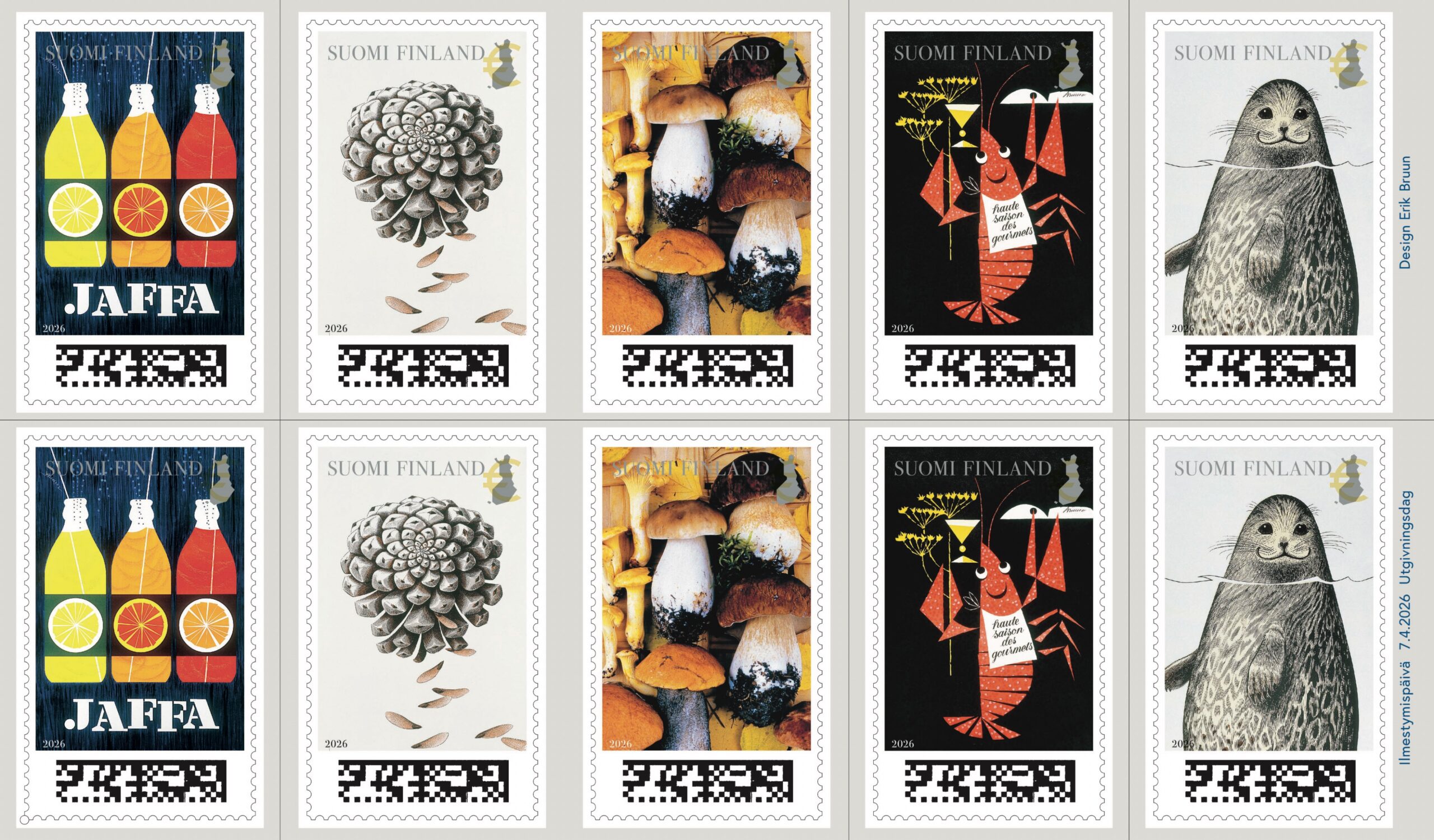
The stamp sheet features five works from Erik Bruun’s career. The stamps feature the Crayfish Season poster which promoted Finnish tourism (1958), Jaffa’s colorful outdoor advertising poster (1959), the iconic Saimaa Ringed Seal poster (1974), the Mushrooms in August poster from the Forest Finland series (1996) and the self-published Pine Cone poster (2005).
”I have followed Erik’s career for a long time and he has definitely been one of my inspirations in becoming a graphic designer. His talent and precision are in a league of their own. In addition, Erik’s attitude towards life is always positive, which many people could learn from,” says Ilkka Kärkkäinen, who was responsible for the graphic design of the stamps.
Nature and birds as the source of inspiration
Nature has been a great source of inspiration throughout Erik Bruun’s career and he has produced numerous nature-themed works ever since the 1960s. His Saimaa Ringed Seal poster has become the symbol of nature conservation in Finland.
Bruun has illustrated several dozen bird motifs for stamps, which were inspired by his childhood in Karelia.
”The migration routes of millions of birds crossed the Karelian Isthmus in the spring and autumn. My father also often took us to Lake Äyräpäänjärvi, where many rare birds nested. It’s enchanting to watch birds.”
The sketches of Erik Bruun’s bird-themed stamps are on display at the Postal Museum (Museum Centre Vapriikki, Alaverstaanraitti 5, Tampere). The exhibition is open until August 16.
A partner with many ideas
Tommi Kantola, Design Manager at Posti, has produced numerous stamps together with Erik Bruun.
”As a creative person, Erik has had many ideas for designing stamps. He also has an excellent ability to focus on what is essential in his illustrations,” says Kantola.
”It has been a great honor to work with Erik for over 20 years. He has often invited me to his home in Suomenlinna to take a look at his sketches. Erik’s office was full of history and he was happy to show me his other works from over the years as well. These visits were always the highlights of the stamp projects, and they have stayed with me.”
Erik Bruun 100 Years is a 10-stamp sheet containing five different domestic no-value indicator stamps.
Postal: Posti Group Oyj | Website: https://www.posti.fi/index-en.html
Latest issue: 927