New Issues and stamp news 896
Gibraltar – Post & Go – Year of the Snake 2025
Issue date: July 04, 2025
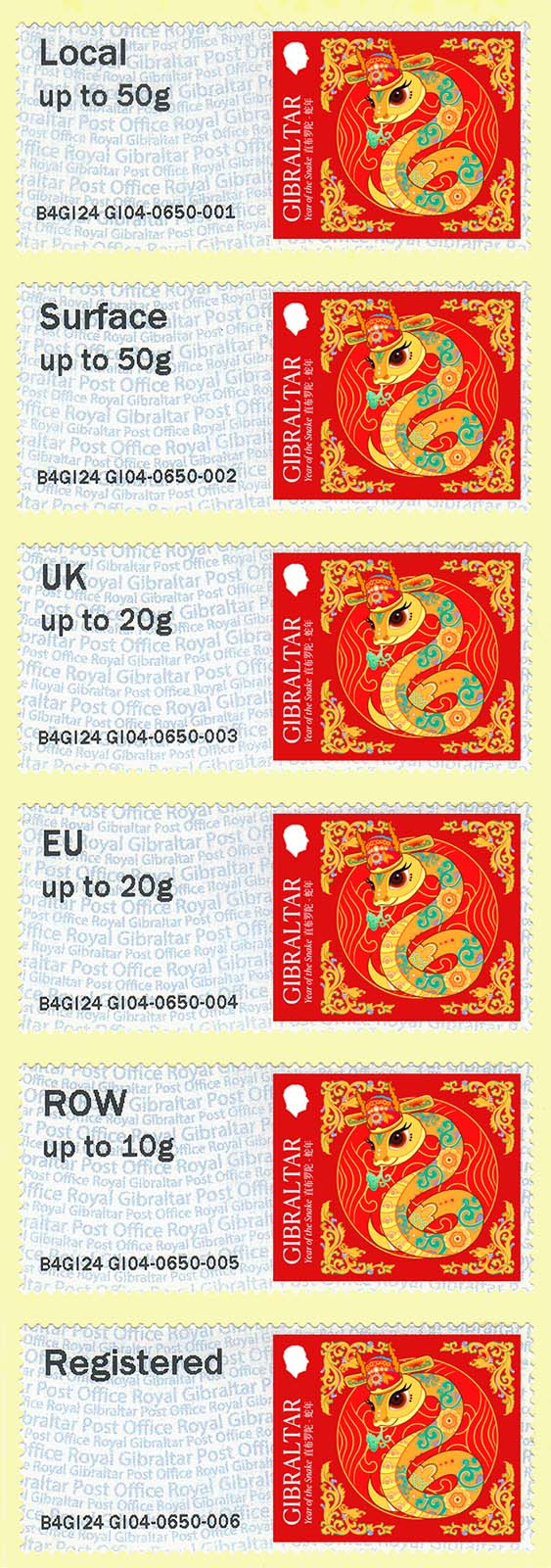
Post & Go machines issue a new generation of self-adhesive postage stamps that are rapdily capturing the interest of stamp collectors. The stamps were first introduced by the Royal Mail back in 2008. Gibraltar is proud to issue a new set of Post & Go for the Year of the Snake issue.
The Year of the Snake in 2025 promises to be a time of introspection and wisdom, as those born under this sign are believed to embody traits such as intelligence, grace, and intuition. Snakes are often seen as enigmatic and resourceful, adept at navigating challenges with a strategic mindset. They are known for their ability to think deeply and plan meticulously, making them excellent problem-solvers. Additionally, individuals born in the Year of the Snake are often viewed as charming and persuasive, capable of captivating others with their insightful perspectives. This year encourages embracing those qualities, fostering a deeper understanding of oneself and the world around us.
The illustrations created for the Year of the Snake incorporate several traditional Chinese elements to convey deep cultural symbolism. The background features cloud patterns (祥云) and motifs that represent happiness and good fortune. In Chinese culture, cloud patterns are often seen as a symbol of the celestial, representing good fortune and the connection between heaven and earth.
The snake’s body is adorned with similar cloud motifs, reinforcing the themes of luck and prosperity. At the center of the design, there’s a floral pattern inspired by ancient Chinese art from the YungangGrottoes of the Northern Wei period, reflecting the timeless beauty and artistic heritage of China. Finally, the snake is depicted with a lingzhi(灵芝) in its mouth, a revered mushroom in Chinese culture that symbolizes health, longevity, and good fortune. This element further enhances the auspicious nature of the illustration, making ita powerful and meaningful design for the Year of the Snake. The patterns on the snake’s body are frequently used in various forms of Chinese cultural and artistic works, including ceramics, New Year paintings, and architectural designs, adding a rich layer of traditional significance to the illustrations.
Gibraltar – Post & Go – Europa 2025
Issue date: July 04, 2025
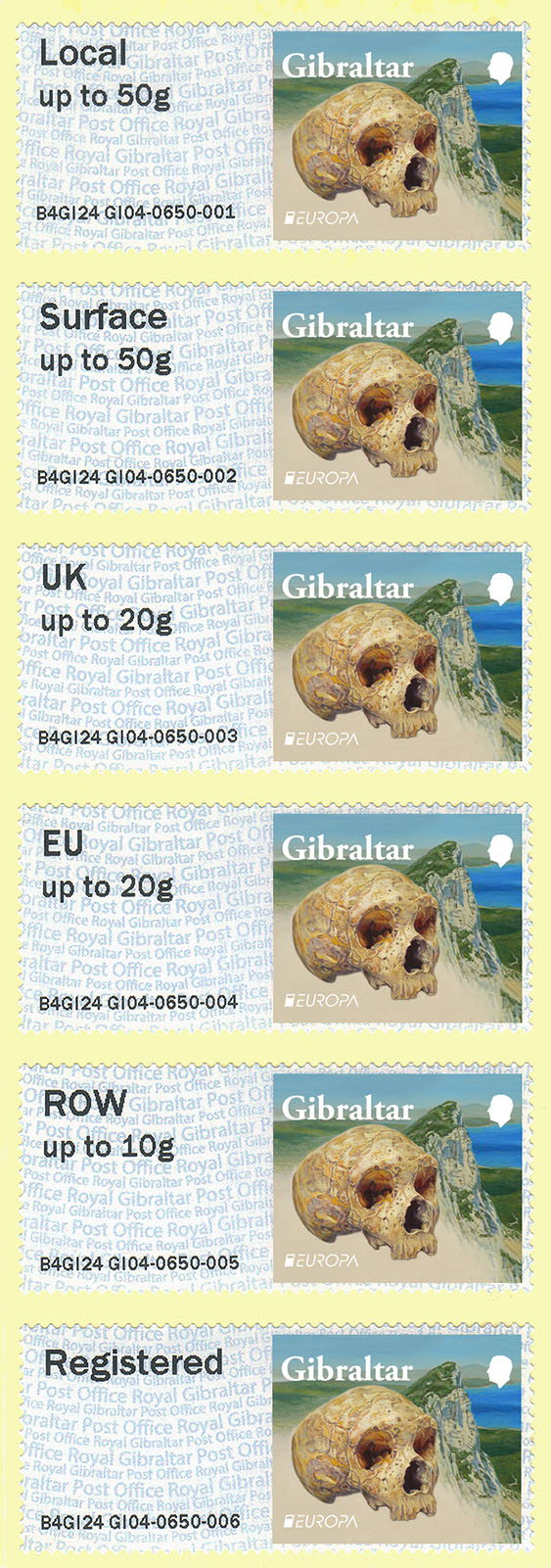
Post & Go machines issue a new generation of self-adhesive postage stamps that are rapdily capturing the interest of stamp collectors. The stamps were first introduced by the Royal Mail back in 2008. Gibraltar is proud to issue a new set of Post & Go for the Europa 2025 issue.
The Gibraltar Neanderthal skulls are among the most significant fossil discoveries related to Neanderthals. The first skull, known as the Forbes’ Quarry Skull or Gibraltar 1, was discovered in 1848 at Forbes’ Quarry, on the northern face of the Rock of Gibraltar. This find predated the famous discovery of Neanderthals in Germany’s Neander Valley (1856), but its importance wasn’t fully recognised at the time. The skull is that of an adult female and exhibits classic Neanderthal features such as a large brow ridge, a long, low skull, and a robust build. It remains one of the best-preserved Neanderthal skulls ever found.
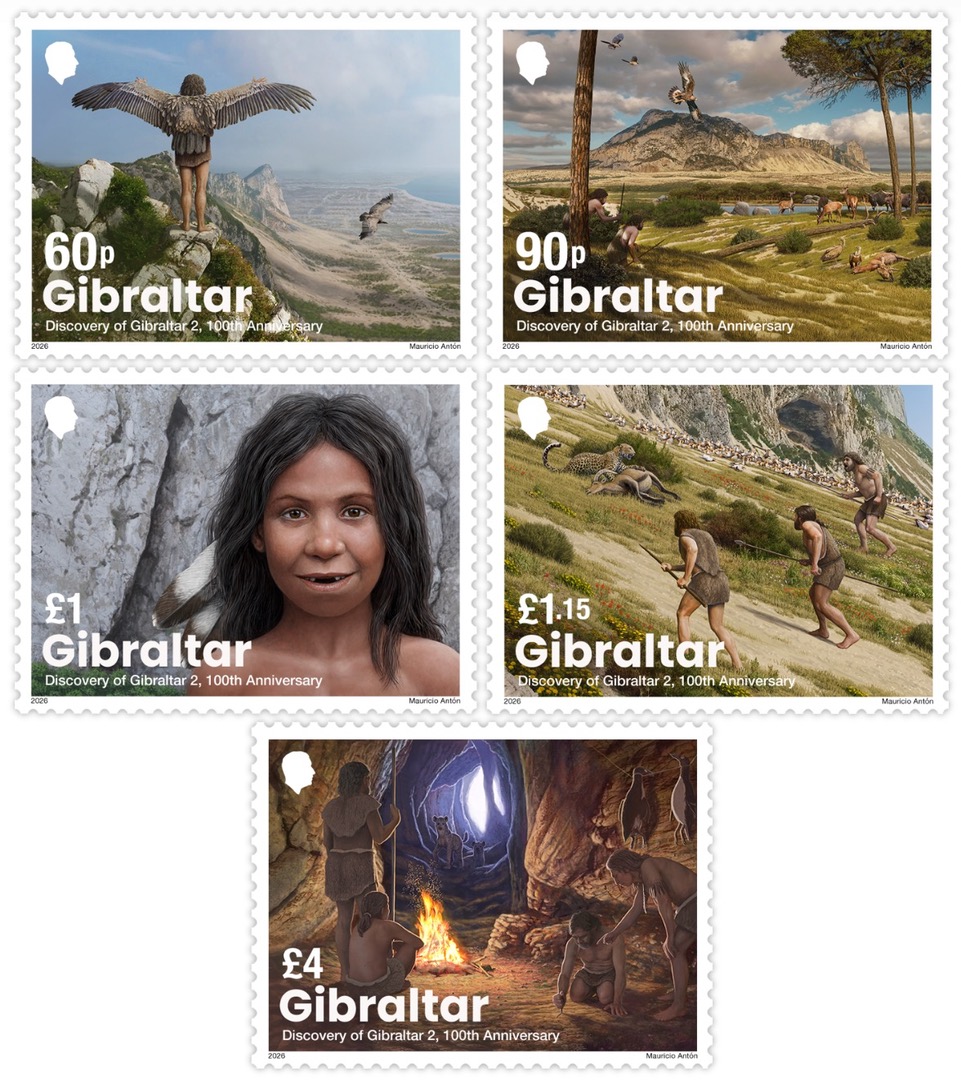
A second skull, Gibraltar 2, was found in 1926 close to Forbes’ Quarry, at Devil’s Tower Cave and belonged to a Neanderthal child. This discovery provided valuable insights into the growth and development of Neanderthals. Studies of the Gibraltar Neanderthals suggest they were among the last surviving populations of their species, with evidence indicating that Neanderthals lived in the region until around 32,000 years ago, long after they had disappeared from much of Europe.
Gibraltar’s caves, particularly Gorham’s Cave, on the Rock’s eastern side, have provided further evidence of Neanderthal life, including hearths, tools, and even possible engravings that suggest symbolic behavior. The region’s mild climate and rich marine resources may have contributed to the Neanderthals’ prolonged survival. Today, the Gibraltar skulls are housed in the Natural History Museum in London, and Gorham’s Cave is a UNESCO World Heritage Site, recognised for its importance in understanding Neanderthal history.
Recent research on the Gibraltar Neanderthals has shed light on their diet, behavior, and cognitive abilities. Isotopic analysis of remains from Gorham’s Cave suggests that these Neanderthals had a diverse diet, including marine resources such as shellfish, fish, and seals, challenging earlier notions that Neanderthals were primarily big-game hunters. Additionally, discoveries of charred plant remains indicate they also consumed roasted vegetables. Perhaps most intriguingly, an engraving found in Gorham’s Cave, a cross-hatched pattern etched into the rock, has been interpreted as possible evidence of symbolic or artistic behavior, suggesting that Neanderthals were capable of abstract thought. These findings contribute to the growing understanding that Neanderthals were not the brutish, primitive beings they were once thought to be, but rather intelligent and adaptable hominins capable of complex survival strategies.
Malta – EUROMED 2025 – Resources of the Mediterranean
Issue date: July 9, 2025
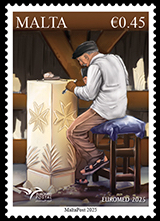
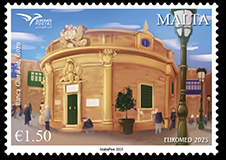
The Postal Union for the Mediterranean (PUMed), is a regional postal community, consisting of 20 member countries, intended to promote the collective interests of its national postal operators within the Euro-Mediterranean region. It serves to strengthen network integration and to develop projects that assist member countries to keep up with the challenges of constantly evolving postal markets.
MaltaPost has again joined members of the Euromed Postal Joint Stamp Project in the issue of a new set of stamps bearing a common theme. The Euromed stamp series is an annual commitment begun in 2014 by the founding member countries. The theme chosen for 2025 is ‘Resources of the Mediterranean’ and in this regard MaltaPost launched a philatelic issue, consisting of two stamps, both related to the main natural resource of the Maltese Islands – globigerina limestone. This is a soft, honey-coloured, workable stone that hardens over time, making it ideal for building and for sculpture. Since antiquity it has been used in construction, from the building of the prehistoric temples in the Neolithic period to high-rise apartments and hotels in the 21st century.
The 0.45 stamp shows a skilled stonemason, carving a low-relief design out of a large stone structure. This process involves sketching of the design onto the stone and using a variety of tools to carve away the background and shape the raised elements. The limestone’s relatively soft texture makes it easy to carve, rendering it an essential material for both structural and decorative purposes. Over various centuries, the Maltese stonemason developed exceptional skill in this craft elevating it to a form of artistic expression.
This craftsmanship is evident in the intricate facades of baroque churches, ornate balconies, and detailed sculptures that adorn Malta and Gozo. The second stamp, bearing a denomination of 1.50, shows a striking example of a magnificent baroque building, the Banca Giuratale in Gozo, built in 1733 from locally quarried globigerina limestone. The facade is a masterpiece of stone craftsmanship. It features a balanced and symmetrical composition that showcases delicate Baroque detailing, such as scrollwork, garlands, and fluted pilasters, all meticulously carved into the stone. Particularly notable are the ornate surrounds of the windows and doors, where stone has been chiselled with extraordinary finesse to create fine floral motifs, coats of arms, and symbolic embellishments.
Malta – Presidency of Malta – Council of Europe
Issue date: June 25, 2025
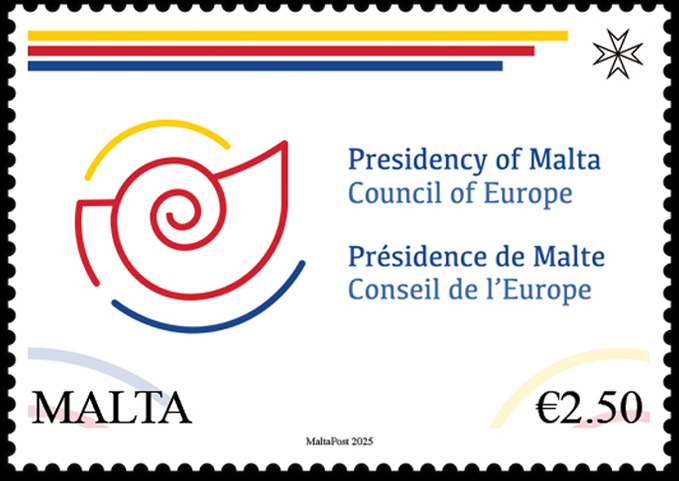
The logo was created by Ms Shelley Borg and chosen from amongst 16 other designs submitted by students reading for a B.A. (Hons.) degree in graphic design at the Malta College of Arts, Science and Technology (MCAST).
Malta’s Presidency is a celebration of the nation’s enduring commitment to European values, a reflection of its role in shaping a more just, resilient and united continent. Based in Strasbourg, France, the Council of Europe is Europe’s oldest political organisation. Founded in the aftermath of the Second World War, it stands at the heart of the continent’s commitment to human rights, democracy, and the rule of law.
With 46 member states, it supports governments in strengthening their legal systems and institutions by setting legal standards, promoting international cooperation, providing training and assistance, and monitoring compliance. Through its many legal instruments, including the European Convention on Human Rights and the European Court of Human Rights, it gives people legal tools to defend their rights and ensure societies are more just.
Malta will hold the Presidency of the Council of Europe between 14 May and 14 November 2025, where it shall preside over the Committee of Ministers which is the decision-making body of the Organisation. This marks the fourth time that Malta will be leading this prestigious Organisation, coinciding with the 60-year anniversary of the country’s membership within the Council of Europe.
With a policy programme focused on the empowerment of children and youth, inclusion and equality, as well as combating violence and discrimination, Malta aims to address pressing challenges while inspiring young people to speak up and make a difference. With a varied cultural programme in Strasbourg, Malta seeks to promote its rich cultural heritage and extensive Maltese talents in both a traditional and contemporary manner.
To celebrate this milestone event, MaltaPost shall issue a new stamp, carrying a denomination of 2.50, displaying the new logo purposely designed for Malta’s Presidency. At the heart of the design is the spiral motif, a symbol found across ancient civilizations and deeply embedded in Malta’s prehistory. The motif, inspired by a Conch shell (red) and also a symbol of continuity, is complemented by three additional symbols that capture the essence of the Maltese Islands: The Sun (yellow), represents warmth, energy and the hospitality of the Maltese people; the iconic ‘Luzzu’ fishing boat (red), reflects Malta’s rich maritime traditions; and the Sea (blue), symbolising Malta’s strong connection to the Mediterranean and its openness to dialogue and cooperation.